


Gender dysphoria is the distress that can arise when your gender identity doesn’t match the sex you were assigned at birth. [5]
It can show up as discomfort with your body, pain around how others perceive you, or a persistent sense that something feels deeply out of place. It looks different for everyone, ranging from a low hum in the background to something that makes daily life genuinely hard to get through.
If you’re struggling with this, you’re not alone. Research published in Health Psychology Research estimates that about 0.6% of American adults experience gender dysphoria, and anxiety and depression are among the most common co-occurring challenges. [1]
There are things that help. The strategies below cover what’s most consistently supported, from day-to-day coping to longer-term care.
If gender dysphoria is affecting your mental health and daily life, affirming gender dysphoria support can make a real difference. When you’re ready, taking that first step is always worth it.
Need to Know
- Gender dysphoria is the distress that can come from incongruence between your gender identity and assigned sex; it’s real and recognized.
- What helps can look different for everyone. There’s no single right path to coping.
- Social affirmation, community, and self-expression are among the most consistently supported coping strategies.
- Professional care, including therapy and medical options, can reduce dysphoria meaningfully for many people.
- Affirming support from providers who actually understand LGBTQIA+ lives makes a real difference.

Ways to Cope with Gender Dysphoria Day to Day
Dysphoria doesn’t hit the same way every time. What helps in the moment isn’t always what builds longer-term relief.
This list covers both. Take what’s most useful for you.
1. Use your name, your pronouns, your clothes
Being called by your chosen name and pronouns is one of the most effective things for reducing dysphoria-related distress.[2]
Even if you can’t be fully out everywhere, find one space where you can be yourself. A group chat. One friend who gets it. Start there.
2. Find your people
Dysphoria gets heavier in isolation.
Community doesn’t erase it, but it makes it bearable in a way that being alone with it rarely does. An online space, a queer friend, a support group. Being around people who don’t require you to explain yourself is genuinely healing.
3. Move in ways that feel good
Movement can shift how you feel inside your body. But it doesn’t have to mean feeling good about all of it.
Dr. Mae Casanova, Psy.D., a clinician at Element Q Healing Center, notes that gender dysphoria can create rigid thinking that categorizes all parts of the body as “bad.” Somatic practices like body scanning can help. As Dr. Casanova explains, “By exploring sensations in the body part by part, it can help to add some flexibility to the way that someone feels about their body.”
The goal isn’t to feel great about everything. It’s to find what feels neutral, or even grounding. Dr. Casanova offers this as a starting point: “Maybe there’s a heaviness in your legs that feels stabilizing. Maybe the area around your shoulders feels neutral.” That’s enough.
4. Give yourself permission to avoid what you need to avoid
Not every trigger is avoidable. But stepping back from what makes things worse is okay.
Setting limits around certain spaces, mirrors, or interactions isn’t a weakness. It’s protecting yourself while you’re already carrying something heavy.
5. Have something small that grounds you
On the worst days, a go-to that brings you back into your body, or out of your head, can really help. This might be:
- Music that feels like yours
- A show that’s genuinely comforting
- Time with a pet
- A hot shower
- Breathwork or movement
- A creative practice
These aren’t permanent solutions, but they can give you enough breathing room to get through the difficult moments.
6. Work with a therapist who understands gender dysphoria
Psychotherapy is a core part of gender dysphoria care.[1]
The therapist matters enormously. A good gender-affirming therapist understands how identity, trauma, and minority stress interact. They won’t push you toward any particular path.[3]
If you’ve had bad experiences with mental health care before, that’s worth naming. It’s also worth trying again with someone who is actually equipped to support you.
7. Explore medical options if and when you’re ready
Hormone therapy and other medical interventions aren’t required. But for many people, they’re genuinely life-changing.
Research shows that people who receive affirming medical care report significantly improved quality of life and reduced psychological distress.[1]
If you’re curious, talking with an affirming provider is a good starting point. You don’t have to decide anything to have the conversation.
8. Let at least one person fully see you
You don’t need a village. You just need one person.
Someone who uses your name without being reminded. Who sees your gender without asterisks. Who you can reach out to on a bad day. If you don’t have that person yet, that’s okay. Maybe it’s time to take action and prioritize finding them.
9. Build a daily practice of connecting with yourself
When trust with your physical body feels hard, building trust with your inner self can be an anchor.
Dr. Casanova puts it this way: “Connecting with one’s ‘Self’ can be a daily practice to help tolerate feelings of discomfort that come from gender dysphoria. Trusting and building one’s intuition are ways that someone can cultivate a connection and trust with their inner self, even if they have mistrust with their physical body.”
This might look like journaling, meditation, breathwork, or simply pausing to check in with yourself throughout the day. The practice doesn’t have to be formal. It just has to be consistent.
Finding Community & Chosen Family in San Diego & Online
Finding your people is one of the most protective things you can do for your mental health. It doesn’t happen overnight, but it’s worth looking for.
If you’re in San Diego:
- The San Diego LGBT Community Center offers support groups, social events, and mental health services
- PFLAG San Diego. Peer support for LGBTQIA+ individuals and families
- Diversionary Theatre. Queer cultural community with events open to everyone
- San Diego Pride. Year-round programming beyond the annual Pride festival
If in-person feels like too much right now, online community is real community:
- Lex. A queer social app built around shared interests; good for finding local people and events
- Meetup. Search for LGBTQIA+ groups in your area
- Reddit and Facebook Groups. Queer and trans communities where people share experiences, often anonymously
The Jed Foundation has a helpful guide on finding community across different settings, including arts spaces, sports groups, volunteer communities, and more.
You don’t have to post anything. You don’t have to walk into a room full of strangers. Just being in a space, reading, watching, listening, is a valid first step.
Your people are out there.
Does Dysphoria Get Better?
For most people, gender dysphoria doesn’t resolve on its own.
But it does change, meaningfully, with affirmation and support. Untreated, gender dysphoria is associated with significantly higher rates of anxiety and depression. [1]
That’s not meant to frighten you. It’s validation that what you’re feeling is real, and that seeking out support isn’t an overreaction.
Most people find that dysphoria shifts as their access to affirmation grows. The distress tends to ease when people are genuinely seen, and intensifies when they aren’t.
That’s not a character flaw. That’s a predictable response to a world that often gets it wrong.
When To Seek Support for Gender Dysphoria
Sometimes dysphoria overlaps with depression, anxiety, or trauma in ways that make daily life hard to manage.
If you’re experiencing any of these, more structured support may be worth exploring:
- Difficulty getting through work or school
- Withdrawing from people you care about
- Distress that feels constant or unmanageable
- Co-occurring depression or anxiety that isn’t improving
Structured options such as Intensive Outpatient Programs (IOPs) or Partial Hospitalization Programs (PHPs) are non-residential, allowing you to return home at the end of the day.
At their best, they’re built around the specific realities of LGBTQIA+ lives, offering clinical support and real community.
At Element Q, that includes access to our gender euphoria closet, which is open to all clients. We know that not everyone has a safe space to dress as their affirmed gender. Here, you do. Expression is treated as part of your care, not separate from it.
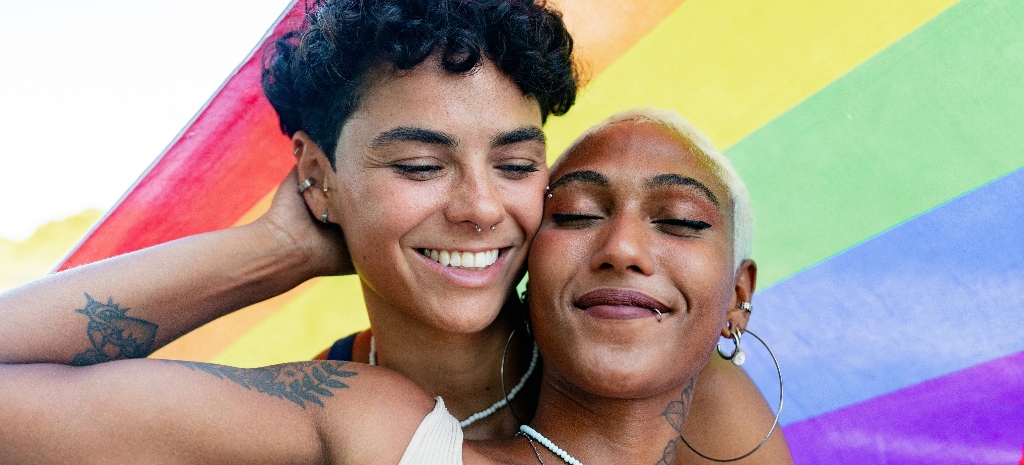
Explore Affirming Gender Dysphoria Care
If you’re looking for support that understands what it means to be queer or trans, Element Q Healing can help.
Call us at 858-422-1860 or verify your insurance to learn more about what options are available to you.
You don’t have to have it figured out before you get in touch. Questions are always a perfect place to start.
Frequently Asked Questions
1. What is the best way to treat gender dysphoria?
There’s no single best approach; care is individualized because dysphoria itself is different for each person. Research supports a range of options, including gender-affirming therapy, social affirmation practices, hormone therapy, and in some cases, surgical interventions. What matters most is that care is provided by someone who respects your autonomy and genuinely understands LGBTQIA+ experiences, not someone who treats your identity as a problem to be managed.
2. How do you address gender dysphoria without transitioning?
Medical transition is one option among many, not a requirement. Social affirmation, using a chosen name and pronouns, adjusting presentation, and building community with people who see you, can reduce dysphoria significantly without any medical intervention. Gender-affirming mental health treatment or therapy can also help you process distress and develop strategies that fit your specific situation and goals.
3. How do you cope with dysphoria on bad days?
On the hardest days, grounding yourself in something small can help. Whether that’s music, movement, time with someone safe, or a comforting routine. Reducing exposure to triggers when you can is also a valid strategy. If bad days are happening often or making it hard to function, connecting with an affirming therapist or care provider can help you build more sustainable support over time.
4. How do you cope with being genderfluid?
Being genderfluid means your gender identity shifts, and that’s a valid experience, not a contradiction. Coping well often involves building flexibility into how you express yourself so you can honor where you are on a given day. Community with other genderfluid and nonbinary people can be especially grounding. Working with a therapist who understands gender diversity beyond binary identities can also help you navigate a world that doesn’t always make room for fluidity.
4. Can therapy help with gender dysphoria?
Yes, and the research supports this. Psychotherapy is recognized as a core component of gender dysphoria care. [1] The key is finding a therapist who is genuinely knowledgeable about LGBTQIA+ experiences, as opposed to someone who is supportive and well-intentioned. A good gender-affirming therapist won’t try to change your identity or steer you toward any particular path. They’ll help you process what you’re experiencing and make decisions that feel right for you. [4]
Sources
[1] Anderson, D., Wijetunge, H., Moore, P., Provenzano, D., Li, N., Hasoon, J., Viswanath, O., Kaye, A. D., & Urits, I. (2022). Gender dysphoria and its non-surgical and surgical treatments. Health Psychology Research, 10(3), 38358. https://pmc.ncbi.nlm.nih.gov/articles/PMC9501960/
[2] Tordoff, D. M., Wanta, J. W., Collin, A., Stepney, C., Inwards-Breland, D. J., & Ahrens, K. (2022). Mental health outcomes in transgender and nonbinary youths receiving gender-affirming care. JAMA Network Open, 5(2), e220978. https://jamanetwork.com/journals/jamanetworkopen/fullarticle/2789423
[3] Substance Abuse and Mental Health Services Administration. (2015). Ending conversion therapy: Supporting and affirming LGBTQ youth. U.S. Department of Health and Human Services. https://store.samhsa.gov/product/ending-conversion-therapy-supporting-and-affirming-lgbtq-youth/sma15-4928
[4] American Psychological Association. (2015). Guidelines for psychological practice with transgender and gender nonconforming people. https://www.apa.org/practice/guidelines/transgender.pdf
[5] Mayo Clinic. (2022). Gender dysphoria. https://www.mayoclinic.org/diseases-conditions/gender-dysphoria/symptoms-causes/syc-20475255