


Chemsex—using drugs like crystal meth, GHB, or mephedrone during sex—is a practice that’s become increasingly visible within LGBTQ+ communities, particularly among gay and bisexual men. While it’s often talked about in terms of risk and harm, the reality is more nuanced. For many people, chemsex starts as a way to enhance pleasure, manage anxiety around intimacy, or feel more connected during sex. Over time, though, what begins as a choice can become difficult to separate from sexual experiences altogether.
Sometimes called “party and play” or PnP in the U.S., chemsex has particular cultural significance within LGBTQ+ communities. Understanding it requires looking beyond substance use itself to consider questions of connection, intimacy, minority stress, and the social contexts that shape how queer and trans people navigate sexual expression.
For LGBTQ+ folks seeking support with chemsex addiction, finding care that sees all of you makes a real difference. Element Q Healing Center is an LGBTQ+ outpatient rehab in San Diego designed to meet you where you are. Reach out to us today to learn more.
Key Points
- Chemsex uses three main drugs: methamphetamine (crystal meth), mephedrone, and GHB/GBL to enhance or prolong sex.
- The practice is most common among gay and bisexual men, but it isn’t exclusive to these communities.
- Health risks include overdose, cardiovascular problems, STI/HIV transmission, dependency, and impaired consent.
- Minority stress and discrimination within LGBTQ+ communities contribute to patterns of chemsex use.
- Affirming support emphasizes harm reduction, trauma-informed care, and individual autonomy over one-size-fits-all approaches.
Understanding Chemsex and Its Cultural Context
The term “chemsex” originated in UK gay men’s communities in the early 2010s to describe a specific pattern of drug use during sex. The practice centers on three substances chosen for their effects on arousal, stamina, and inhibition: methamphetamine (crystal meth), mephedrone, and GHB/GBL.
People engage in chemsex to extend sexual encounters beyond what’s typical without substances—sometimes for hours or days—and often with multiple partners. The drugs lower inhibitions, increase confidence, enhance physical sensations, and create feelings of connection or euphoria that can feel difficult to access otherwise.
Chemsex exists within broader patterns of seeking connection, managing vulnerability around intimacy, and navigating internalized shame related to sexuality or identity. For many LGBTQ+ people who’ve experienced rejection, discrimination, or trauma, substances can feel like a pathway to sexual experiences with less emotional risk.
The Three Main Substances Used in Chemsex
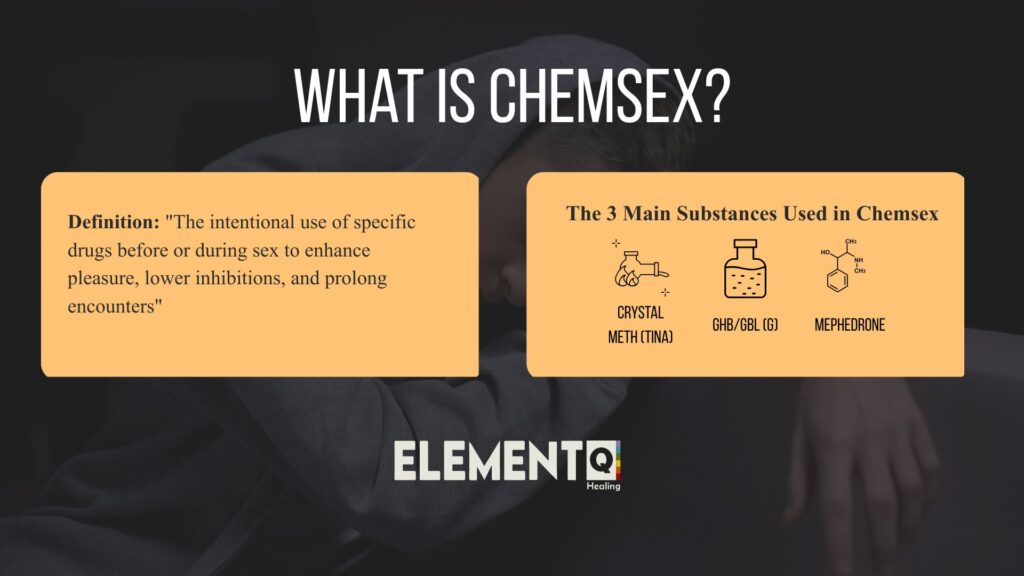
Chemsex centers on three specific drugs, each chosen for distinct effects on arousal, stamina, inhibition, and sensation. Understanding what these substances do—and the risks they carry—is essential for anyone navigating decisions around use or seeking support.
Methamphetamine (Crystal Meth, Tina, T)
Methamphetamine is a powerful stimulant that increases energy, confidence, and sexual arousal while eliminating the need for sleep or food. It creates feelings of euphoria and invincibility, enabling prolonged sexual activity. Risks include paranoia, psychosis, severe cardiovascular damage, dental problems, and high potential for dependency.
Mephedrone (Meow Meow, M-Cat, Drone)
Mephedrone is a stimulant that produces euphoria, heightened sensations, and feelings of empathy and connection. People choose it for the emotional warmth it creates alongside physical arousal. Risks include anxiety, paranoia, cardiovascular problems, and psychological dependency.
GHB/GBL (G, Gina)
GHB/GBL is a central nervous system depressant that creates euphoria, disinhibition, and enhanced physical sensations in small doses. It’s extremely dangerous because the difference between a recreational dose and a fatal dose is very small. Overdose leads to unconsciousness, respiratory failure, seizures, or death. Mixing with alcohol multiplies these risks.
Other substances frequently used alongside these three include ketamine, poppers (alkyl nitrites), and erectile dysfunction medications like Viagra. These are sometimes referred to as club drugs or party drugs, and using multiple substances simultaneously increases both intensity and risk of dangerous interactions.
Why People Engage in Chemsex
The reasons are complex and personal. Some seek enhanced physical sensations or prolonged encounters that feel difficult to achieve otherwise. Others use substances to manage anxiety around sex, body image concerns, or fears of intimacy and vulnerability.
Social contexts matter too. In spaces where chemsex is normalized, people may feel pressure to participate or see it as a pathway to connection and belonging. For LGBTQ+ individuals who’ve experienced rejection or discrimination related to their identity, substances can feel like a way to access intimacy with less emotional exposure.
Minority stress—the chronic stress of experiencing stigma and marginalization—influences patterns around both substance use and sexual behavior. LGBTQ+ people face unique stressors, including coming out, family rejection, workplace discrimination, and experiences of violence. These shape how people relate to intimacy, pleasure, and connection.
Understanding these dynamics doesn’t remove individual agency, but it acknowledges that choices exist within broader social contexts that affect available options and coping strategies.
Physical Health Risks
Chemsex carries significant physical health risks that can become more significant based on the substances involved, frequency of use, and context of sexual activity.
- Cardiovascular strain: Stimulants like methamphetamine and mephedrone increase heart rate and blood pressure, raising the risk of heart attack, stroke, and dangerous body temperature elevation.
- Overdose risk: GHB’s narrow safety margin makes overdose common, especially when combined with alcohol or other depressants. Overdose can cause unconsciousness, respiratory failure, and death.
- Sexual health: Gay and bisexual men face disproportionate HIV risk, and the disinhibiting effects of chemsex drugs make it harder to maintain safer sex practices. Research shows people are less likely to use condoms during chemsex than during sex without substances, increasing transmission of HIV, hepatitis C, and other STIs. Sharing needles during ‘slamsex’ (injecting drugs during sex) further compounds these risks.”
- Physical injury: Prolonged or rougher sexual activity can cause injury. Exhaustion from extended sessions weakens immune function.
Mental Health and Dependency Risks
Regular chemsex use affects mental health in multiple ways. Methamphetamine particularly contributes to depression, anxiety, paranoia, and psychosis. Some people develop dependency, finding it increasingly difficult to experience sexual pleasure or connection without substances. This creates cycles where substance use becomes necessary for intimacy, reinforcing patterns of use.
The psychological aftermath of chemsex sessions often includes shame, regret, or distress about experiences that occurred while judgment was impaired. For people already navigating internalized homophobia, transphobia, or trauma histories, these feelings can be intense and may drive continued use as a way of managing difficult emotions.
Consent and Safety Concerns
Being under the influence makes it difficult to give, receive, or recognize true consent. Boundaries that feel important when sober dissolve during chemsex sessions, which can sometimes lead to sexual experiences someone wouldn’t have agreed to otherwise.
The context increases these risks—multiple partners, sessions that last hours or days, and situations where leaving feels difficult. Add in power dynamics, peer pressure, and the effects of the drugs themselves—it all contributes to situations where it’s difficult to stay in control of what’s happening to you.
If you’re noticing patterns around substance use and sex that don’t feel aligned with who you are or what you want, identity-affirming support can give you space to work through these experiences and figure out what actually feels right for you.
The Impact of Minority Stress
Growing up LGBTQ+ often means navigating a world that doesn’t always feel safe or affirming. That chronic stress—from discrimination, rejection, or constantly assessing whether it’s okay to be yourself—takes a toll. Research on minority stress shows that queer and trans people face higher rates of mental health challenges and substance use, not because of who they are, but because of the stigma and discrimination they’ve experienced.
For many, childhood and adolescence involved hearing that something was wrong with them. Some experienced family rejection, bullying, or learned early on that certain parts of themselves weren’t safe to show. Those experiences don’t just fade—they shape how people feel about intimacy, trust, and letting others in. For gay and bisexual men especially, the HIV/AIDS crisis left deep scars on the community, affecting how connection, sex, and loss are understood and experienced. And discrimination doesn’t stop at childhood—it continues showing up in housing, jobs, healthcare, and everyday public spaces.
Chemsex can become one way of managing all of that. For some folks, it feels like a way to connect without the vulnerability, to quiet anxiety around intimacy, or to escape the weight of everything they carry. That doesn’t mean it’s inevitable or that being LGBTQ+ causes substance use—it just means that choices exist within contexts that shape what feels available or safe.
Affirming treatment takes all of this into consideration. It doesn’t treat identity as the problem or strip away agency. It looks at both the substance use patterns and the underlying experiences—the trauma, isolation, shame, or barriers to real connection—that may be driving them.
Related Podcast Episode: Crucial Things You Need To Know About Shame In Recovery
Finding Affirming Chemsex Support in San Diego
If you’re concerned about chemsex use—your own or someone else’s—affirming and trauma-focused care makes a significant difference. Effective support starts from respect for your autonomy, understanding of LGBTQ+ experiences, and commitment to meeting you where you are.
Trauma-Focused Care
Trauma-focused care goes a step beyond being just trauma-informed—this is treatment designed to actively address the underlying trauma, discrimination, and difficult experiences that may be connected to substance use patterns. This approach recognizes that many people engaging in chemsex have histories of rejection, identity-based discrimination, or painful experiences around sexuality and intimacy. Rather than treating symptoms in isolation, trauma-focused care helps you process and heal from these experiences while building healthier coping strategies. It creates safety by centering your story, honoring your pace, and addressing root causes rather than just behaviors.
LGBTQ+ Affirming Providers
LGBTQ+-affirming care means something different when it’s provided by and for the community. At Element Q, every member of the clinical team is LGBTQ+—they’re not just trained in cultural competence, they bring lived experience. We’ve created a healing space where your identity isn’t treated as the problem—it’s recognized and celebrated. This is care created by people who understand what it’s like to navigate a world that hasn’t always been safe, and who create space where you can talk openly about all of it without judgment or shame.
LGBTQ+ Outpatient Rehab
Outpatient programs like Intensive Outpatient (IOP) or Partial Hospitalization (PHP) offer structured support while you keep working, maintaining relationships, and living your life. You’ll have individual therapy, group support, and access to holistic and somatic approaches that help regulate your nervous system—because trauma lives in your body, not just your thoughts. This might include breathwork, trauma-informed yoga, or other body-based practices that help you feel safer and more grounded without needing substances. You’ll also build practical skills for managing stress, navigating intimacy, and making choices that feel aligned with who you want to be. Our LGBTQ+ specific programs create space to build community with others who get what you’re going through.
Individual Therapy
Individual therapy with a provider specializing in both substance use and LGBTQ+ experiences gives you space to explore what’s really going on—why substances feel necessary, what you’re avoiding, what you actually want your life to look like. At Element Q, individual therapy sessions are individualized to your needs, typically 2-3 times per week as part of your program. It’s a place to process shame, work through trauma, and figure out what a healthier relationship with sex and substances could look like for you, at your own pace and without judgment.
Learn More About LGBTQ+ Rehab
If you’re exploring questions about chemsex, substance use, or finding support that respects your identity and experiences, Element Q Healing Center offers LGBTQ+-affirming outpatient programs designed to meet you where you are. Our approach centers trauma-focused care, conscious recovery principles, and recognition that your journey is your own.
You can reach us at 858-422-1860 to ask questions or learn more about our programs.
Frequently Asked Questions
What is an example of chemsex?
Chemsex might involve using crystal meth before or during sex to increase arousal and stamina, allowing for prolonged sexual activity lasting many hours. Another example is using GHB to reduce inhibitions and enhance physical sensations during sex, often in group settings or with multiple partners. “Slamsex”—injecting methamphetamine or mephedrone during sexual activity—represents a particularly high-risk form of chemsex due to the dangers of injection drug use combined with sexual health risks.
Is chemsex the same as sexualized drug use?
Chemsex is a specific type of sexualized drug use referring to the intentional use of methamphetamine, mephedrone, and GHB/GBL to facilitate or enhance sexual experiences, most commonly within gay and bisexual men’s communities. Sexualized drug use is broader and can include any substance use in sexual contexts—alcohol, cannabis, cocaine, or other drugs. While all chemsex is sexualized drug use, not all sexualized drug use qualifies as chemsex. The term carries a specific cultural meaning and refers to particular substances and community contexts.
What is the origin of chemsex?
The term “chemsex” emerged from gay men’s communities in the United Kingdom in the early 2010s, though the practice of using drugs to enhance sexual experiences existed long before the terminology. The term gained prominence as public health providers and community organizations sought language to discuss specific patterns of substance use occurring within LGBTQ+ communities, particularly around methamphetamine, mephedrone, and GHB. Historical context includes social and cultural dynamics within gay and bisexual men’s communities and the lasting impacts of the HIV/AIDS crisis, which shaped approaches to sex, risk, connection, and loss.
What are the signs someone might need support around chemsex?
Signs someone might benefit from support include finding it difficult to have sex without substances, experiencing negative consequences from chemsex (physical health problems, mental health challenges, relationship conflicts, work or financial issues), feeling unable to reduce or stop use despite wanting to, or experiencing regret, shame, or distress after chemsex sessions. Other indicators include isolation from friends or family, changes in mood or behavior, prioritizing chemsex over other activities or responsibilities, or engaging in sexual behaviors while under the influence that don’t align with sober values or intentions. If these patterns feel familiar, reaching out to an LGBTQ+-affirming provider can provide clarity and support without judgment.
References
Bourne, A., Reid, D., Hickson, F., Torres-Rueda, S., & Weatherburn, P. (2015). Illicit drug use in sexual settings (‘chemsex’) and HIV/STI transmission risk behaviour among gay men in South London: Findings from a qualitative study. Sexually Transmitted Infections, 91(8), 564-568. https://doi.org/10.1136/sextrans-2015-052052
Centers for Disease Control and Prevention. (2023). HIV and gay and bisexual men. https://www.cdc.gov/hiv/data-research/facts-stats/gay-bisexual-men.html
Maxwell, S., Shahmanesh, M., & Gafos, M. (2019). Chemsex behaviours among men who have sex with men: A systematic review of the literature. International Journal of Drug Policy, 63, 74-89. https://doi.org/10.1016/j.drugpo.2018.11.014
Meyer, I. H. (2003). Prejudice, social stress, and mental health in lesbian, gay, and bisexual populations: Conceptual issues and research evidence. Psychological Bulletin, 129(5), 674-697. https://doi.org/10.1037/0033-2909.129.5.674
National Institute on Drug Abuse. (2021). Club drugs (GHB, ketamine, and rohypnol). https://nida.nih.gov/research-topics/commonly-used-drugs-charts#club-drugs
National Institute on Drug Abuse. (2023). Methamphetamine DrugFacts. https://nida.nih.gov/research-topics/methamphetamine
Substance Abuse and Mental Health Services Administration. (n.d.). Trauma and violence. https://www.samhsa.gov/trauma-violence