

Coming down from methamphetamine is physically and emotionally difficult. The crash happens when the drug wears off and your brain’s dopamine levels—which were flooded during use—drop suddenly, leaving you feeling exhausted, unable to feel pleasure (anhedonia), and likely experiencing body aches, depression, and very intense cravings.
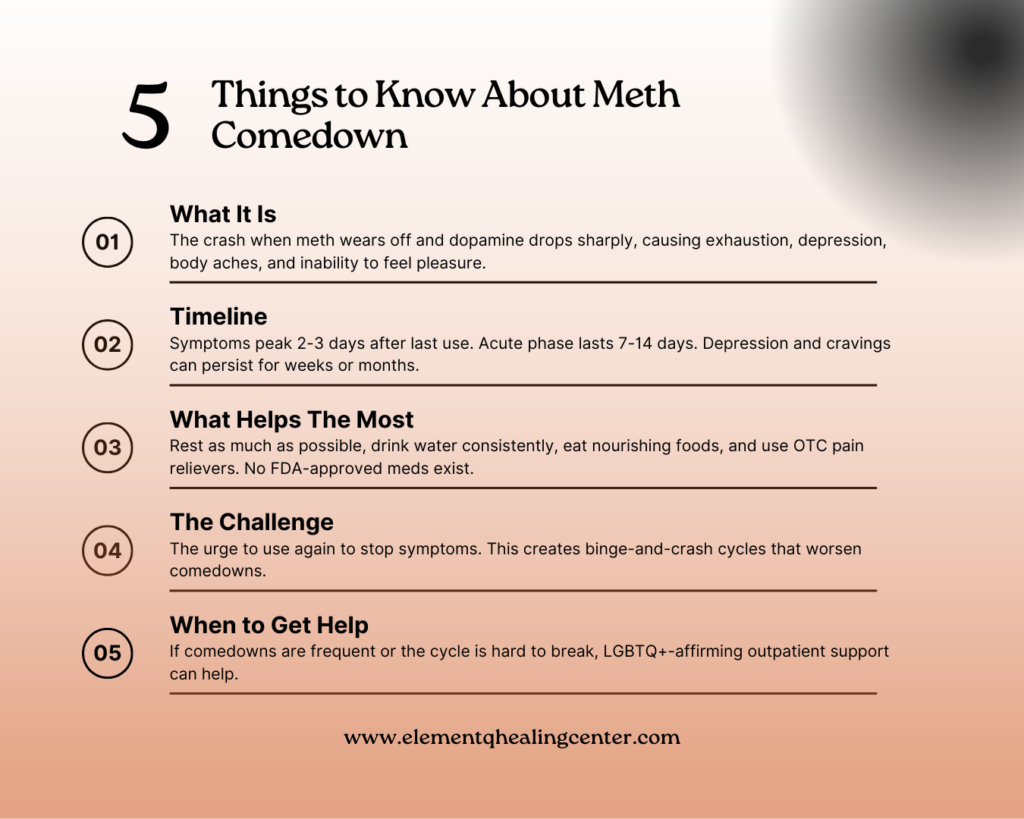
If you’re in the middle of a meth comedown right now, you should rest as much as possible, drink water consistently throughout the day, and eat nourishing foods when you’re able to. The initial crash typically lasts 1-3 days, though many symptoms continue for a week or more.
This article will explore what’s happening during a meth comedown, practical steps for managing symptoms, and when to consider additional support. For queer and trans folks navigating substance use, we’ll also discuss why finding LGBTQIA+ specific treatment can be helpful—especially when traditional treatment settings haven’t felt safe or helpful.
Key Takeaways
- Meth comedowns are caused by sharp drops in dopamine after use, leading to exhaustion, depression, body aches, and inability to feel pleasure.
- Symptoms typically peak 2-3 days after your last use and improve over the following week, though psychological symptoms can persist for months.
- The urge to use again to avoid comedown symptoms can lead to binge patterns that make the problem worse over time.
- Rest, hydration, and nourishing food are the most important tools for managing comedown symptoms—there are currently no FDA-approved medications for meth withdrawal.
- Community support and affirming outpatient programs can help if comedowns are becoming a pattern.
What Is a Meth Comedown?
A meth comedown is the crash that occurs when methamphetamine leaves your system, and your brain’s chemistry struggles to rebalance. Understanding what’s happening can help you navigate the experience with less fear.
Why Comedowns Happen
Methamphetamine is a powerful stimulant that floods your brain with dopamine—a chemical that regulates mood, motivation, energy, and pleasure. During use, dopamine levels can spike to 10-12 times their normal amount. When meth wears off, your brain is left temporarily depleted. Without enough dopamine, you can’t regulate your mood or feel pleasure normally.
Your body is also recovering from significant stress: elevated heart rate, high blood pressure, suppressed appetite, and days without sleep all take a toll on your cardiovascular and nervous systems.
How Long Does a Comedown Last?
Comedowns can happen after a single use, though they become more severe with repeated use. According to the National Institute on Drug Abuse, withdrawal symptoms can begin quickly after stopping meth use, even if you don’t have a substance use disorder.
Initial crash (24-48 hours):
- Extreme exhaustion
- Often sleeping for extended periods
- Your body beginning to recover from stimulant effects
Peak symptoms (2-3 days after last use):
- Most intense discomfort
- Fatigue and body aches
- Depression and irritability
- Strong cravings
- Sleep problems
- Difficulty concentrating
Acute phase (up to 1-2 weeks): Symptoms gradually improve during this time, though you may still experience fatigue, mood changes, and cravings as your brain works to restore normal dopamine functioning.
Longer-term symptoms (weeks to months): Some psychological symptoms—particularly depression, anxiety, low mood, and cravings—can persist for several months, especially with chronic or heavy use.
What Does a Comedown Feel Like?
Meth comedowns cause both physical, mental, and emotional symptoms as your body tries to recover from the effects produced by the drug. Some of these may include:
Physical symptoms
- Extreme exhaustion (even after sleeping)
- Muscle aches, joint pain, or body soreness
- Headaches
- Nausea or upset stomach
- Increased appetite after days of not eating
- Flu-like symptoms (chills, sweating)
Psychological symptoms:
- Anhedonia (inability to feel pleasure from things you normally enjoy)
- Depression, sadness, or hopelessness
- Anxiety, restlessness, or irritability
- Difficulty concentrating or making decisions
- Sleep problems despite feeling exhausted
- Emotional flatness or numbness
- Strong cravings for meth to make the symptoms stop
These difficulties are temporary responses to chemical changes in your brain—not signs of permanent damage or personal failure, even when your thoughts spiral during this time. Going through the stages of a meth comedown is simply your mind and body signaling that it needs time, rest, and nourishment to heal.
How to Manage a Comedown: Immediate Steps
If you’re experiencing a meth comedown right now, here’s what can help ease symptoms and support you in beginning to feel better. While there are currently no FDA-approved medications specifically for methamphetamine withdrawal, the following self-care approaches can provide meaningful relief during the acute phase.
1. Rest and Sleep
Your body desperately needs rest. Meth makes sleep impossible during use, sometimes for days on end. When you’re coming down, sleep is the most important thing you can do.
What helps:
- Create a calm, dark, quiet environment
- Avoid screens if possible
- Don’t feel guilty about sleeping for long stretches
- If sleep won’t come, lie down quietly—even rest without sleep can help your nervous system recover
2. Drink Water Consistently
Meth causes dehydration through increased body temperature, sweating, and increased metabolic rate. Many people also avoid water during use, reaching for sugary or caffeinated drinks instead.
What helps:
- Drink water throughout the day, not just when you’re thirsty
- Try herbal tea, coconut water, or seltzer if plain water feels unappealing
- Take small, frequent sips if drinking large amounts feels overwhelming
- Avoid energy drinks or excessive caffeine—they’ll worsen anxiety and interfere with sleep
3. Eat Nourishing Food
Meth suppresses appetite, and extended use depletes your body of essential nutrients. When you’re ready to eat, focus on foods that help your body repair itself.
What helps:
- Start with bland, easy foods if you’re nauseous: bananas, rice, toast, broth
- Work toward nutrient-dense meals: fruits, vegetables, whole grains, lean proteins
- Eat small amounts throughout the day rather than forcing big meals
- Don’t judge yourself if eating feels difficult—appetite will return as you recover
4. Manage Pain and Discomfort
Headaches, muscle aches, and body pain are common during comedowns.
What helps:
- Over-the-counter pain relievers (ibuprofen or acetaminophen)
- Follow package directions and don’t exceed recommended doses
- Warm baths or showers can ease muscle tension
- Gentle stretching if your body feels up to it
5. Try Gentle Movement (When You’re Ready)
While rest is crucial, light activity—when you feel capable—can help regulate sleep, reduce stress, and support your body’s healing.
What helps:
- Short walks outside (fresh air and sunlight help regulate your system)
- Light stretching or yoga
- Nothing intense or demanding—the goal is gentle support, not exercise performance
- Listen to your body and rest when you need to
6. Consider Calming Practices
Some people find that mindfulness, breathing exercises, or other calming practices help ease emotional distress during a comedown.
What helps:
- Deep breathing exercises (breathe in for 4 counts, hold for 4, exhale for 6)
- Meditation apps designed for anxiety or stress
- Progressive muscle relaxation
- Massage, acupuncture, or sound healing if accessible
- Anything that helps you feel more grounded in your body
When Comedowns Become a Pattern
If you’re experiencing repeated comedowns, it may be a sign that meth use is escalating or becoming more difficult to stop. One of the most challenging aspects of a comedown is the strong urge to use again to make the symptoms stop. This can lead to a ‘binge and crash’ pattern where people take meth repeatedly to avoid the comedown, which ultimately makes comedowns more severe over time.

Some people enter periods of intense use called “runs,” or “binges,” where they may be taking meth every few hours for days while going without food and sleep entirely. When this happens repeatedly, your brain’s dopamine system becomes less responsive, so comedowns may last longer and become more severe over time.
Chronic meth use is also associated with:
- Cardiovascular strain (heart problems, high blood pressure)
- Severe dental problems (“meth mouth”)
- Skin issues from scratching
- Cognitive changes affecting memory and decision-making
- Mental health symptoms like chronic anxiety, paranoia, or depression
For LGBTQIA+ folks, substance use patterns can be connected to experiences of minority stress, internalized stigma, discrimination in healthcare settings, or social environments where drug use is normalized (like party scenes or chemsex situations). Recognizing these parallels isn’t about judgment; it’s about understanding the bigger picture so you can make informed choices about what steps to take and whether support may be beneficial.
Related: What is Chemsex? Understanding Chemsex Addiction & Recovery
If comedowns are becoming more frequent—or if the cycle of using, crashing, and using again is getting harder to break—you don’t have to figure it out alone. Element Q Healing Center in San Diego is an outpatient rehab designed by and for LGBTQIA+ communities. Our clinical team brings both professional expertise and lived experience as queer and trans people—we understand the contexts that shape substance use and mental health challenges and can help you work through them in a space designed for you. Contact us to learn more about our programs in San Diego.
The Role of Community and Peer Support
Support from others who understand what you’re going through can reduce isolation, a huge driver of continued substance use, and provide practical strategies for managing use or working toward change.
Peer support options:
- San Diego Crystal Meth Anonymous – Meetings throughout San Diego County offering peer support through 12-step principles (sandiegocma.org)
- The San Diego LGBT Community Center – Substance use support, harm reduction resources, and connections to LGBTQ+-affirming (thecentersd.org/here-for-you)
- The Collective Coalition – San Diego’s LGBTQ+ harm reduction group offering Narcan training and sober community events (thecollectivecoalitionsandiego.org)
For queer and trans individuals, finding spaces where your identity is respected—and where you don’t have to explain or defend who you are—is deeply important. Affirming environments allow you to focus on healing rather than spending energy managing stigma, translating cis and heteronormative advice to fit your life, or educating providers.
What Outpatient Treatment Can Offer
If meth use is affecting your life and repeated comedowns have become a pattern, substance use treatment programs like Intensive Outpatient (IOP) or Partial Hospitalization (PHP) provide structured support without requiring you to leave your daily life.
What outpatient programs typically include:
- Individual therapy to explore underlying experiences and develop coping strategies
- Group therapy for peer connection and shared learning
- Medical monitoring and support
- Holistic modalities like EMDR, mindfulness, trauma-informed yoga, or acupuncture
- Family or relationship work when appropriate
For LGBTQIA+ individuals, identity and gender-affirming programs recognize that substance use doesn’t happen in a vacuum. Programs designed by and for queer and trans communities understand minority stress, healthcare discrimination, trauma, and the cultural contexts—like party scenes or chemsex—where drug use may be normalized or celebrated.
Affirming treatment addresses substance use AND the systems and experiences that shape it. The goal isn’t to change who you are—it’s to help you navigate challenges while staying connected to yourself and your community.
Learn More About LGBTQIA+ Specific Rehab

If you’re navigating meth use and looking for support that respects who you are, Element Q Healing Center offers identity-affirming outpatient treatment designed specifically for LGBTQIA+ folks in San Diego. Our entire clinical team is made up of fellow LGBTQIA+ members, bringing both lived experience and clinical expertise to their work.
We understand the unique factors that shape substance use in queer and trans lives, and we’re here to answer questions without pressure or judgment.
Call 858-422-1860 or visit our contact page to learn more.
Frequently Asked Questions
What can I do to ease the effects of a meth comedown?
The most effective steps for easing a meth comedown are rest, hydration, and nutrition. Sleep as much as your body needs—extended sleep is normal and necessary during the crash. Drink water consistently throughout the day, eat nourishing foods when you’re able (starting with bland options if you’re nauseous), and consider over-the-counter pain relievers for headaches or body aches. Gentle movement, like short walks, can help once you have some energy. There are currently no FDA-approved medications for meth withdrawal, so self-care strategies are your primary tools for managing symptoms. One of the hardest parts of a comedown is the intense urge to use again to make the symptoms stop—this is how binge-and-crash patterns develop. If you’re experiencing repeated comedowns or the cycle is becoming harder to break, reaching out for support can help.
How can I help someone through a comedown?
The most helpful things you can do are encourage rest and sleep, provide water and hydrating fluids, offer nourishing food when they’re ready, and create a calm, safe environment. Over-the-counter pain relievers can help with headaches or body aches. Emotional support matters too—be patient, non-judgmental, and present without lecturing or trying to force solutions. If they’re open to it, offer to connect them with peer support groups or affirming treatment resources like those offered at Element Q Healing Center in San Diego.
What is the hardest drug to quit?
There’s no single drug that is necessarily the hardest to quit—difficulty stopping substance use depends on individual factors, including how the drug affects your brain, your patterns of use, your environment, your support system, and access to treatment. Methamphetamine, opioids, alcohol, and nicotine are all associated with significant dependence. What matters most is finding the right support for your specific situation, whatever you’re navigating.
How long does a meth comedown last?
Research tells us that meth comedown symptoms typically peak 2-3 days after your last use and begin to improve over the following week. The acute phase usually lasts 7-14 days, though some symptoms—especially depression, low mood, anxiety, and cravings—can continue for weeks or months, particularly with chronic or heavy use.
The exact timeline of a meth comedown depends on several factors: how much and how frequently you’ve been using, your overall health, and whether you’ve eaten or slept recently. If symptoms are extreme or you’re concerned about your experience, reaching out to a therapist, mental health provider, or substance use treatment program can help. Contact Element Q Healing Center to learn more about our approach to LGBTQ+ affirming drug and alcohol rehab.
How can I get through the comedown faster? Can I remove meth from my body faster?
Your body metabolizes and eliminates methamphetamine through natural processes involving your liver and kidneys. While staying hydrated, eating nutritious foods, and getting rest support these processes, there’s no safe way to significantly speed up the comedown or drug elimination itself. Avoid wasting money on unproven “detox” products, extreme fasting, or other methods claiming to “flush” drugs quickly—these are ineffective and can actually be harmful. Focus on supporting your body’s natural recovery through rest, hydration, and healthy eating.
Is meth use more common in LGBTQIA+ communities?
Research shows that methamphetamine use rates are higher among some segments of LGBTQIA+ communities, particularly gay and bisexual men. This disparity is often connected to minority stress (chronic stress from living with discrimination), internalized stigma, trauma, rejection experiences, and social contexts where substance use is normalized—such as party scenes or chemsex environments. Understanding these patterns isn’t about pathologizing queer and trans communities—it’s about recognizing systemic factors that influence substance use and ensuring treatment approaches address these realities with cultural competence and affirmation.
References
NIDA. 2024, November 20. Methamphetamine. Retrieved from https://nida.nih.gov/research-topics/methamphetamine on 2026, January 10
McGregor C, Srisurapanont M, Jittiwutikarn J, Laobhripatr S, Wongtan T, White JM. The nature, time course and severity of methamphetamine withdrawal. Addiction. 2005 Sep;100(9):1320-9. doi: 10.1111/j.1360-0443.2005.01160.x. PMID: 16128721.
Acheson LS, Williams BH, Farrell M, McKetin R, Ezard N, Siefried KJ. Pharmacological treatment for methamphetamine withdrawal: A systematic review and meta-analysis of randomised controlled trials. Drug Alcohol Rev. 2023 Jan;42(1):7-19. doi: 10.1111/dar.13511. Epub 2022 Jul 21. PMID: 35862266; PMCID: PMC10083934.
Parsons JT, Kelly BC, Weiser JD. Initiation into methamphetamine use for young gay and bisexual men. Drug Alcohol Depend. 2007 Oct 8;90(2-3):135-44. doi: 10.1016/j.drugalcdep.2007.02.017. Epub 2007 Mar 29. PMID: 17398040; PMCID: PMC1993847.