


If you’ve used molly (MDMA) and are experiencing the crash that follows, you’re likely wondering how long you’re going to feel this way. The comedown from molly—that period of exhaustion, depression, or low mood, mental fog, and overall discomfort after the high fades—is a common experience that can feel really challenging, especially if you’re going through it for the first time or if the symptoms seem to be getting worse with repeated use.
Understanding what’s happening in your brain and body during a molly comedown can help you make sense of your experience and provide validation that those feelings will pass. More importantly, knowing when your symptoms might point to a need for support—like substance use treatment or drug & alcohol rehab—can be an important step toward feeling better and addressing any patterns that may be affecting your mental health.
Related: Molly vs. MDMA: What’s the Difference?
Key Takeaways
- A typical molly comedown lasts 1-3 days, though some people may experience symptoms for up to a week, depending on personal factors and how much they’re using.
- The comedown happens because MDMA depletes serotonin, dopamine, and norepinephrine—chemicals in your brain that regulate mood, energy, and emotional balance.
- Regular molly use can lead to longer, more intense comedowns and can even develop into withdrawal symptoms that are difficult to manage without support.
- For LGBTQIA+ folks, molly and party drug use can intersect with minority stress, experiences of discrimination, and the search for spaces where identity is celebrated rather than questioned.
- Finding treatment that understands both substance use and the unique pressures of navigating queer and trans life can make a meaningful difference in addressing patterns that may be affecting your overall wellness.
How Long Does a Molly Comedown Last?
A molly comedown typically lasts between 1 and 3 days after your last use. For most people, the worst symptoms appear within the first 24 to 48 hours after the high wears off, and then gradually improve in the following days. However, this timeline isn’t universal. Some people report feeling the negative effects for up to a week, particularly if they’ve used larger amounts or if they use molly on a regular basis.
The comedown begins within a few hours after the drug’s peak effects fade. What starts as a gradual decline in energy and mood can intensify into a more pronounced crash by the next day. During this time, your brain is working to restore balance after the surge of feel-good chemicals molly triggered—chemicals like serotonin that help regulate your mood and energy.
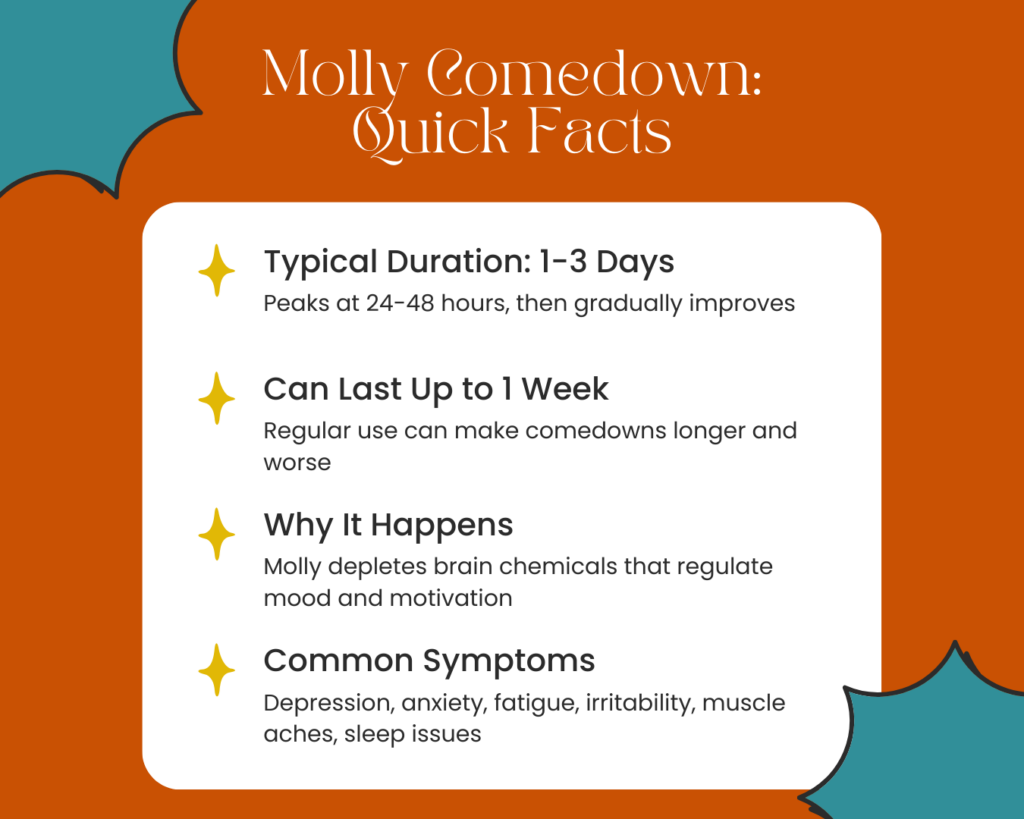
Several factors influence how long your comedown lasts. If you’ve used molly frequently, your brain may take longer to recover because repeated use depletes these natural mood-regulating chemicals more severely. The amount you used, whether the molly was mixed with other substances, your overall health, and whether you stayed hydrated and rested can also impact the length of your experience.
If you’re finding that comedowns are lasting longer than a few days, becoming more severe over time, or significantly affecting your ability to function, these patterns may indicate that your body is struggling to recover between uses. This can be a sign that exploring your relationship with molly use, or other party drugs, might be beneficial.
What Happens During a Molly Comedown?
As mentioned earlier, during a molly comedown, your brain is attempting to restore balance after MDMA caused a massive release of serotonin, dopamine, and norepinephrine. According to the National Institute on Drug Abuse, these neurotransmitters regulate mood, energy, pleasure, and emotional connection—the same feelings that made the molly high feel so intense. Once these chemical messengers are depleted, your brain is left temporarily unable to produce the normal levels needed for baseline functioning. In simpler terms, this means your brain can’t generate feelings of happiness, motivation, or emotional connection on its own—which explains the sense of sadness and emptiness you’re often left with.
Common Emotional Symptoms
The symptoms you experience during an MDMA comedown are your body’s response to depleted brain chemistry. Many people describe feeling depressed, anxious, or emotionally flat and empty—a stark contrast to the euphoria they felt while high.
Irritability, mood swings, and difficulty concentrating are also common as your brain struggles without its usual supply of serotonin and dopamine.
Physical Effects
Physical symptoms can be just as challenging as the emotional ones. Common experiences include:
- Muscle aches and headaches
- Itense fatigue and low energy
- Loss of appetite
- Trouble sleeping
- General sense of discomfort
These symptoms are a result of the stress placed on your mind and body by molly. You feel exhausted and tired because your body lacks the dopamine and norepinephrine that usually provide energy and motivation.
How Long Do MDMA’s Effects Last?
MDMA’s primary effects typically last for an average of 3 hours, but this window varies based on the amount you take, the purity, and your individual metabolism. Most people begin feeling the effects within 45 minutes of ingesting the drug, with the experience typically reaching its peak intensity within 15-30 minutes.
During the peak, the feelings of euphoria, emotional openness, and sensory enhancement are at their highest. Research on MDMA’s acute effects documents that users commonly report increased feelings of closeness, emotional warmth, and heightened sensory experiences during this phase. After the peak, these effects gradually begin to taper down over the next several hours. By hours 4 to 6, most of the intense feelings have subsided, though some people still feel some lingering effects—perhaps mild stimulation or continued emotional sensitivity.
What Is a Molly Hangover?
A “molly hangover” is the lingering period of discomfort that extends beyond the initial comedown phase. While the comedown refers to the immediate crash after the high ends—which typically occurs during the first 1 to 3 days—the hangover period is generally known as the days that follow, when the initial acute symptoms may have decreased, but you still don’t feel like yourself.
During a molly hangover, you might experience emotional numbness, difficulty concentrating, mental fog, or a persistent low or depressed mood. Physical symptoms like exhaustion and appetite changes can continue, though they’re usually less intense than during the comedown itself. Many people describe feeling “off” or disconnected, as if they’re going through the motions of life without feeling fully present or engaged.
Duration and Recovery
The hangover phase can last several days after the comedown, especially if you used a large amount of molly or use it regularly. This extended recovery period reflects the fact that your brain needs more time to fully restore neurotransmitter function after MDMA’s effects.
The difference between the comedown and hangover can be surprising because it highlights how long molly’s negative effects can truly last. What might have been a few hours of feeling good can translate into a week or more of feeling extremely low. If you’re noticing that hangovers are lasting longer, feeling more severe, or making it difficult to work, be present in your relationships, or participate in activities you normally enjoy, it may be worth exploring with someone who understands substance use.
If you or a loved one is looking for LGBTQIA+ specific support with substance use, Element Q is here. Reach out to us today to learn more about our affirming outpatient programs in San Diego.
What Affects How Long a Comedown Lasts?
The length and intensity of a molly comedown aren’t the same for everyone. Several factors can influence the way your body and brain respond to MDMA and how long it takes to recover and feel like yourself again.
Dosage and Purity
Higher doses of MDMA deplete more neurotransmitters, which can lead to more severe and longer-lasting comedowns. Additionally, what’s sold as “molly” is often mixed with other substances—typically amphetamines, bath salts, or synthetic cathinones—which can intensify negative effects and further complicate recovery.
Frequency of Use
If you use molly more than once in a short period of time, your brain doesn’t have time to fully restore serotonin levels between uses. Research spanning 25 years of MDMA studies shows that over time, this leads to increasingly severe comedowns, longer recovery periods, and potentially lasting changes in mood regulation. What might have been a mild comedown after your first use can become a multi-day ordeal as use continues.
Individual Body Chemistry
Factors like age, metabolism, overall health, and genetics all play a role in how quickly you metabolize MDMA and how efficiently your brain can restore its normal balance, so you start feeling better. Some people naturally recover more easily and quickly, while others may be more sensitive to MDMA’s depleting effects, experiencing more intense symptoms and taking longer to bounce back.
Lifestyle and Environmental Factors
There’s no way to avoid the crash that follows taking MDMA. However, staying hydrated, getting adequate sleep, and eating well can support your brain’s recovery process. Alternatively, dancing for hours in hot environments, drinking alcohol, or using other substances alongside molly can make dehydration worse, increase the risk of potential damage to brain cells, and cause the comedown period to last longer.
Underlying Mental Health
If you’re already managing depression, anxiety, or trauma, molly’s impact on serotonin can exacerbate these conditions, making the emotional aspects of the comedown more intense and harder to recover from. For LGBTQIA+ individuals, research on minority stress shows that the chronic stress of navigating discrimination and stigma can compound both mental health challenges and substance use patterns in complex ways
The Molly Withdrawal Timeline
While a single use of molly results in a comedown, regular and ongoing use can lead to a withdrawal pattern that’s more complex and prolonged. If you’ve been using molly frequently, your brain’s ability to produce and regulate serotonin becomes increasingly compromised.
First 24 to 72 Hours
This initial phase of molly withdrawal typically brings the most intense symptoms. You may experience significant anxiety, depression, irritability, and fatigue. Physical symptoms like headaches, muscle aches, and trouble sleeping are common. Cravings for MDMA often peak during this time, as your brain seeks the neurotransmitter (dopamine and serotonin) surge it has become accustomed to.
Days 4 to 10
During this phase, the most intense physical discomfort usually begins to ease, but emotional and psychological symptoms often continue. You might continue to feel depressed, anxious, or emotionally flat. Sleep problems and low energy are common, and you may struggle with concentration, memory, or decision-making.
Days 11 to 28
As you move through the second and third weeks without molly, withdrawal symptoms generally continue to improve, though the pace of recovery varies. Some people feel significantly better by this point, while others still experience depression, low motivation, or occasional cravings. The timeline depends on many factors, including how long and how heavily you used molly, your overall health, and what support systems you have in place.
It’s important to understand that MDMA withdrawal is primarily psychological rather than physically dangerous. However, the emotional and mental health symptoms that accompany it can be genuinely distressing and difficult to navigate alone, especially if you were using molly to cope with other challenges.
MDMA Detox and Treatment Options
If you’re considering stopping molly use, particularly after regular use, understanding what support options exist can help you make informed decisions about your care. Unlike some substances, MDMA withdrawal isn’t typically medically dangerous, but the psychological symptoms can be challenging enough that having support makes a big difference.
Medical Monitoring and Symptom Management
Medical monitoring can be helpful during the initial detox period. While there are no FDA-approved medications specifically approved for MDMA withdrawal, healthcare providers can offer support for the symptoms you’re experiencing. If you’re dealing with significant depression or anxiety during withdrawal, short-term medication support may help you get back to baseline.
Therapeutic Support
Cognitive behavioral therapy (CBT) has strong evidence for helping people understand the thought patterns and behaviors that contributed to their substance use and helping to develop healthier coping strategies. Individual therapy can provide a space to explore what molly was offering you—whether it was emotional relief, social connection, or escape from difficult feelings—and to identify other ways to meet those needs.
Outpatient Treatment Programs
When weekly individual sessions aren’t enough, intensive outpatient programs (IOP) and partial hospitalization programs (PHP) can offer a more comprehensive level of support. At Element Q Healing Center, this level of support offers multiple therapy sessions per week, group support, and integrated somatic and holistic approaches to healing. Outpatient programs can be particularly valuable if you’ve found it difficult to stop on your own or if drug use has been intertwined with other mental health challenges.
Identity-Affirming Care
For LGBTQIA+ individuals, the importance of identity-affirming care cannot be overstated. Substance use in queer and trans communities often intersects with experiences of minority stress, discrimination, and the search for spaces where you can be fully yourself. Treatment that doesn’t understand these dynamics may miss crucial aspects of what your use has meant and what recovery needs to address.
At Element Q Healing Center, we recognize that addressing substance use means understanding the whole context of your life—including how your identity, your experiences of marginalization, and your search for authentic connection have shaped your relationship with drugs like MDMA. Our healing center is proud to offer therapy from providers who share lived experience in LGBTQIA+ communities and space to process how stigma may have contributed to use patterns.
Holistic and Community-Based Approaches
Holistic approaches to recovery might include nutritional support to help restore brain chemistry, mindfulness practices to manage cravings, and body-centered therapies and somatic practices that address trauma and stress. Support groups and community connections—whether 12-step programs, LGBTQIA+-specific groups, or other recovery-oriented spaces—can provide ongoing accountability and understanding.
Learn more about the holistic healing and evidence-based approaches utilized at Element Q Healing Center.
When to Consider Support for Molly Use
Deciding whether to seek support for molly use is a personal decision, and there’s no single threshold that applies to everyone. That said, certain patterns can indicate that your relationship with molly might be affecting your overall well-being in ways that deserve attention.
Signs That Support Might Be Helpful
You might benefit from exploring support if you’re noticing:
- Comedowns lasting longer or feeling more intense over time
- Difficulty functioning at work, school, or in relationships during or after comedowns
- Strong cravings for molly between uses
- Wanting to cut back but finding it difficult to do so
- Using molly to cope with depression, anxiety, loneliness, or stress
- Molly use affecting your physical health, mental health, or important relationships
- Feeling like you need molly to feel comfortable in social situations or your own body
Considerations for LGBTQIA+ Individuals
For LGBTQIA+ folks, it’s worth considering whether molly use has become tied to your ability to feel comfortable in your body, express your identity, or connect with community. If molly feels like one of the only ways you can access those experiences, that’s valuable information worth exploring with someone who understands both substance use and the unique pressures of navigating queer and trans life.
You Don’t Have to Wait
You don’t need to wait until things feel completely unmanageable to reach out for support. Exploring your options and asking questions is an important first step, regardless of where you are in your relationship with substance use.
Learn More About Affirming Drug Rehab in San Diego
If comedowns from molly have become difficult to manage, or if you’re noticing patterns around your use that concern you, you don’t have to face this alone. At Element Q Healing Center, our outpatient programs offer identity-affirming care from clinicians who share lived experience in our community, providing intensive support that addresses both substance use and mental health while honoring your authentic self.
Call us at 858-422-1860 or visit our contact page to learn more about your options.
Frequently Asked Questions
How long does it take for a drug to be cleared from the body?
MDMA is typically cleared from your system within 2-3 days. The drug itself has a half-life of about 8 hours, meaning half of the dose is eliminated in that time. However, while the drug may be physically cleared, the neurochemical effects (the depletion of serotonin and other neurotransmitters) can last much longer, which is why comedown symptoms continue well after MDMA has left your system. Standard drug tests can detect MDMA for 1-3 days in urine, up to 24 hours in blood, and up to 90 days in hair follicles, though these detection windows vary based on usage patterns and individual metabolism.
How long does MDA last?
MDA (methylenedioxyamphetamine), sometimes called “sass,” is chemically similar to MDMA but produces slightly different effects. MDA’s primary effects typically last 4-6 hours, which is slightly longer than MDMA’s 3-6 hour duration. The comedown from MDA follows a similar pattern to molly, though some users report that MDA’s comedown can feel more intense, possibly because MDA has stronger stimulant properties. Like MDMA, MDA depletes serotonin and can produce the same days-long recovery period marked by exhaustion and fatigue, low mood, and other comedown symptoms.
How long does it take to test negative for molly?
The detection window for MDMA depends on the test type. For urine tests, which is the most common screening method, MDMA typically remains detectable for 1-4 days after last use, though heavy or frequent users may test positive for slightly longer. Blood tests have a shorter detection window of about 24-48 hours. Saliva tests can detect MDMA for 1-2 days. Hair follicle tests have the longest detection window, potentially showing MDMA use for up to 90 days, though these tests are less commonly used. Detection times always vary based on dosage, frequency of use, metabolism, hydration, and body composition.
What makes outpatient treatment different from inpatient programs?
Outpatient treatment allows you to receive structured support for substance use while continuing to live at home and maintain your daily responsibilities like work, school, and family commitments. Intensive outpatient programs (IOP) typically involve 9-12 hours of programming per week, while partial hospitalization programs (PHP) offer more intensive support with 20+ hours weekly. Both provide individual therapy, group therapy, psychiatric support if needed, and often holistic approaches to healing. Unlike inpatient or residential treatment, outpatient rehab doesn’t require you to step away from your life entirely, making treatment a little more accessible while still providing the structure and clinical support needed to address substance use patterns and underlying mental health difficulties.
References
Baylen, C. A., & Rosenberg, H. (2006). A review of the acute subjective effects of MDMA/ecstasy. Addiction, 101(7), 933-947. https://doi.org/10.1111/j.1360-0443.2006.01423.x
Parrott, A. C. (2013). Human psychobiology of MDMA or ‘Ecstasy’: An overview of 25 years of empirical research. Human Psychopharmacology: Clinical and Experimental, 28(4), 289-307. https://doi.org/10.1002/hup.2318
National Institute on Drug Abuse. (2020). MDMA (Ecstasy/Molly) DrugFacts. https://nida.nih.gov/publications/drugfacts/mdma-ecstasymolly
Meyer, I. H. (2003). Prejudice, social stress, and mental health in lesbian, gay, and bisexual populations: Conceptual issues and research evidence. Psychological Bulletin, 129(5), 674-697. https://doi.org/10.1037/0033-2909.129.5.674