


Does sex help with anxiety? Sex can help ease anxiety by releasing feel-good hormones that relax your body and improve your mood, though it’s not a cure on its own. Sexual activity can also help you feel more connected to your partner, supporting emotional safety and reducing feelings of loneliness.
This guide explains how sex affects anxiety, what the science says, and how to use this information in a healthy, realistic way in your own life.
Call (858) 422-1860 or verify your insurance to learn more about recovery programs built for LGBTQIA+ individuals navigating mental health, substance use challenges, and trauma.
What Is Anxiety?
Anxiety is a feeling of ongoing worry, fear, or nervousness that can affect your thoughts, body, and daily life, even when there is no clear danger. Anxiety keeps your body in “fight-or-flight” mode, which can cause constant stress, poor sleep, trouble focusing, and problems in daily activities and relationships.
Common Symptoms of Anxiety:
- Constant worry or fear
- Restlessness or feeling on edge
- Fast heart rate or shortness of breath
- Sweating, shaking, or tense muscles
- Trouble sleeping or focusing
- Stomach problems or headaches
- Feeling tired or overwhelmed
Common Types of Anxiety:
- Generalized anxiety disorder (constant worry about many things)
- Panic disorder (sudden panic attacks)
- Social anxiety (fear of social or public situations)
- Specific phobias (intense fear of certain things or situations)
- Separation anxiety (fear of being away from loved ones)
- Health anxiety (constant worry about illness)
If sex feels like your main way to cope with anxiety, you might benefit from exploring healthier anxiety treatment options.
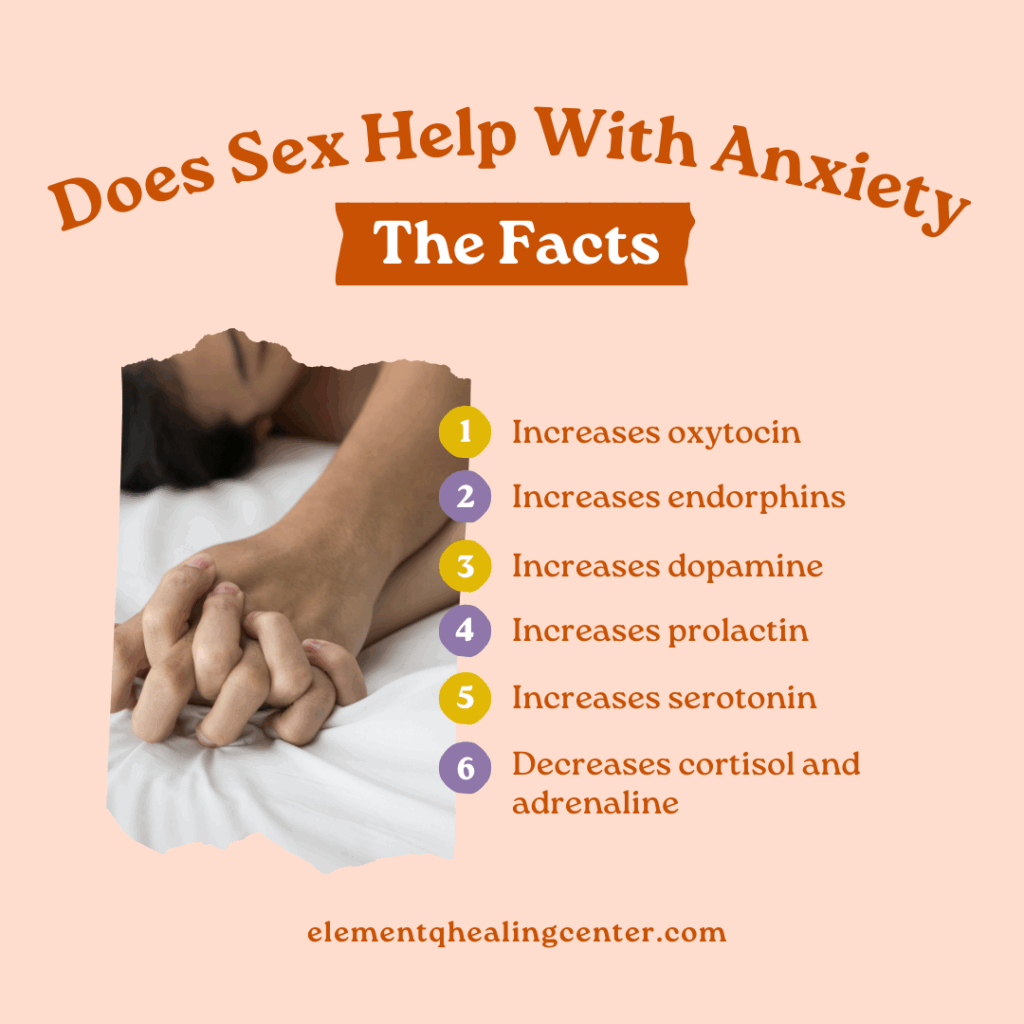
6 Science-Backed Ways Sex Relieves Stress and Anxiety
How does sex help with anxiety? Sex affects your brain and body in real, measurable ways that can help lower stress and ease anxiety. Here are five science-backed mechanisms that explain why intimacy can improve mood and help your nervous system relax.
1. Increased Oxytocin
Oxytocin is often called the “bonding hormone” because it helps you feel close, safe, and emotionally connected to your partner. During regular sex, your body releases more oxytocin, which can lower stress levels and calm your nervous system. This can help reduce feelings of anxiety and increase a sense of trust and comfort.
Levels of Oxytocin (the “love hormone”) tend to peak about 40 minutes after sex, showing a physiological change associated with intimacy.
2. Increased Endorphins
Endorphins are natural chemicals in your brain that reduce pain and increase feelings of pleasure and comfort. During sex, your body releases more endorphins, which can help improve your mood and create a calming, stress-relieving effect.
3. Increased Dopamine
Dopamine is a “feel-good” chemical that helps control pleasure, motivation, and reward. During sex, dopamine levels rise, which can improve your mood and create a sense of enjoyment and satisfaction. This boost can temporarily reduce anxious thoughts and help you feel more emotionally balanced.
Brain imaging shows that during orgasm, neurons in the Ventral Tegmental Area (VTA), the origin of the reward-related dopamine circuit, become active, suggesting a surge of dopamine release in areas tied to motivation and reward.
4. Increased Prolactin
Prolactin is a hormone linked to relaxation and calm, and it rises after orgasm. This increase helps signal to your body that it’s time to rest, unwind, and feel emotionally settled. Higher prolactin levels after sex are one reason people often feel sleepy, peaceful, and less tense afterward.
More interestingly, a study found that the increase in prolactin after intercourse was about 400% greater than after masturbation, suggesting a strong physiological response tied to intimacy with a sexual partner.
5. Increase Serotonin
Sex can raise serotonin levels, a brain chemical that helps regulate mood, calmness, and emotional balance. Higher serotonin is linked to feeling more relaxed, stable, and less overwhelmed, which can ease anxious thoughts.
6. Decreased Cortisol and Adrenaline
Cortisol and adrenaline are stress hormones that rise when your body is in “fight-or-flight” mode. Sexual activity can lower these hormones by activating your relaxation response and shifting your body out of a high-alert state. As a result, you may feel calmer, less tense, and more emotionally settled after sex.
Call (858) 422-1860 or verify your insurance to learn more about gender-affirming mental health care and anxiety treatments.
Health Benefits of Sex
How does sex help with anxiety? Sex supports both physical and emotional health, not just intimacy and pleasure. Here’s how it can benefit your body and mind in simple, real-world ways:
- Sex as a Mood Booster: It releases feel-good chemicals that can help lift your mood and reduce stress.
- Sex for Better Brain Function: It increases blood flow and brain activity linked to memory and mental sharpness.
- Sex for a Stronger Relationship: It builds emotional closeness and trust between partners.
- Sex as a Workout: It burns calories and engages muscles like light physical exercise. This can increase overall wellness and self-esteem.
- Sex for Better Sleep: It helps your body relax, making it easier to fall asleep afterward (like any physical activity).
- Sex for Cardiovascular Health: It supports heart health by raising your heart rate, similar to mild exercise, which can lower blood pressure.
Sex, Mental Health, and the LGBTQIA+ Community
There is a notable gap in published studies that explicitly measure the effect of sexual activity (or intimacy) on stress or anxiety levels among LGBTQ+ participants only.
Reviews of coping strategies for sexual-minority youth/queer adults talk about mental-health interventions (e.g. therapy, mindfulness, social support), but none list “sex or sexual intimacy” as a studied coping mechanism for anxiety or stress relief.
A 2024 study on psychological well-being among queer populations notes the importance of social support, resilience, and coping, but does not analyze sexual behaviour or intimacy as a variable.
The question “How does sex help with anxiety for LGBTQIA+ individuals?” still needs closer study.
How Sex Might Cause Anxiety in LGBTQIA+ Individuals
While sex can be calming for some people, LGBTQIA+ individuals may face unique pressures that can make intimacy stressful rather than soothing.
Minority Stress and Fear of Judgment
Ongoing experiences with stigma, discrimination, or rejection can heighten anxiety around dating and intimacy. Worry about being judged or misunderstood can make sexual situations feel unsafe or tense.
Past Trauma or Negative Experiences
Some LGBTQIA+ individuals have experienced bullying, harassment, or sexual trauma related to their identity. These experiences can make intimacy triggering and emotionally difficult rather than comforting.
Pressure to Conform or Perform
Feeling pressure to meet expectations within a community or fit certain labels can create stress around sex. This can lead to self-doubt and anxiety about “doing it right.”
Lack of Emotional Safety or Acceptance
Not feeling fully accepted by family, partners, or society can affect how safe sex feels emotionally. Without a sense of security, intimacy may increase anxiety instead of easing it.
Prevalence of Chemsex in the Community
Chemsex refers to the intentional use of specific drugs to enhance, prolong, or facilitate sexual experiences, typically within the LGBTQIA+ community.
Not everyone who engages in chemsex will find it becomes an issue, but certain patterns may indicate when substance use has shifted from choice to something more challenging.
Gender and Body Dysmorphic + Sex
Gender- and/or body-dismorphia can make sex unpleasant or stressful for members of the LGBTQIA+ community.
Talking about these and other body issues requires a specialized lens with inclusivity as a focus. See what Dr. Patrick Lockwood has to say on the Element Q Podcast:
Pro Tips: How to Get More Sexual Stress Relief
How does sex help with anxiety in real-world situations? Small changes in how you approach intimacy can make sex more relaxing, meaningful, and supportive to your mental health.
Tip 1: Make Time for Genuine Connection
Focus on spending quality time together, not just rushing into intimacy. Emotional closeness helps your body feel safer and more relaxed. Feeling emotionally connected often makes physical intimacy more effective at relieving stress.
Tip 2: Learn What You & Your Partner Like
Open communication helps remove pressure and guesswork from sex. Knowing each other’s needs makes intimacy more enjoyable and less stressful. Comfort and confidence play a big role in emotional relaxation.
Tip 2: Take Care of Your Physical and Mental Health Holistically
Good sleep, nutrition, and stress management support your sexual health too. When your body feels better, sex is more likely to feel emotionally calming. Mental and physical well-being make it easier to enjoy connection and closeness.
How Stress Can Affect Sex
Does sex help with anxiety? Yes. But the reverse is true, too. Sex can affect anxiety, but anxiety can also be affected by your sex life. For example:
- Low libido and emotional disconnection: Ongoing stress can reduce desire and make it hard to feel emotionally present or interested in intimacy.
- Performance anxiety and fatigue: Mental overload and exhaustion can lower confidence and make sex feel like a chore instead of a release.
- The stress–sex feedback loop: Stress lowers sexual interest, and less intimacy can increase stress, creating a repeating cycle.
Call (858) 422-1860 or verify your insurance to learn more about our recovery programs built for LGBTQIA+ individuals navigating mental health problems like anxiety disorders or sex addiction.
Sex & Anxiety FAQ
Here are some questions about sex and anxiety that people also ask:
Can Sex Cure Anxiety?
Sex cannot cure anxiety, but it can support emotional well-being by activating neurotransmitters like dopamine, oxytocin, and serotonin that help calm the nervous system. Does sex help with anxiety? Yes. But only to a point.
Large-scale research and meta-analysis studies show that sexual behavior can improve mood and stress response, but it should not replace therapy, medication, or structured treatment for anxiety disorders.
Can Masturbation Help With Anxiety?
Yes, masturbation can temporarily reduce stress by triggering the release of neurotransmitters that promote relaxation and pleasure.
Ejaculation also supports physical release and can help regulate tension, though frequent anxiety, sexual dysfunction, or erectile dysfunction may reduce these benefits.
Can a lack of sex contribute to anxiety?
For some people, a low sex drive or long-term absence of intimacy can increase loneliness, stress, and emotional buildup. This may be especially noticeable during menopause, in older men, or when sexual dysfunction affects confidence and emotional health.
How Often Should You Have Sex?
There is no “right” number. What matters most is maintaining a healthy sex life that feels enjoyable and pressure-free. Frequency varies widely by age, health, and life stage, including for older men and those experiencing menopause or changes in sexual drive.
Does sex help with depression?
Sex may improve mood and energy levels by supporting brain chemistry and emotional connection, but it is not a treatment for clinical depression.
Some research suggests sexual activity may also benefit the immune system and overall health, yet mental health conditions still require professional care when symptoms persist.
When to Seek Professional Help
Sometimes anxiety needs more support than lifestyle changes can provide, especially when it begins to affect your relationships, health, or sense of self.
“I can’t manage anxiety alone anymore.”
If your symptoms feel stronger, last longer, or interfere with work, school, sleep, or relationships, it may be time to seek help. Feeling overwhelmed most days or relying on sex as your only way to cope can signal that extra support is needed.
“My sexual anxiety feels tied to gender dysphoria or LGBTQIA+ identity stress.”
When anxiety is connected to body dissatisfaction, gender dysphoria, internalized homophobia, or worries about LGBTQIA+ acceptance, professional support can help you feel safer in your own skin. Affirming care can improve both mental health and your relationship with intimacy.
“My sex, masturbation, or porn use feels out of control.”
If sexual behavior starts to feel compulsive, secretive, or hard to stop, it may be a sign of emotional distress rather than desire. A mental health professional can help you understand the pattern and build healthier coping tools.
Get LGBTQIA+-Affirming Support for Anxiety & Sexual Wellness
If anxiety or sexual-health concerns affect your wellbeing or relationships, reach out for affirming, trauma-informed care. Element Q Healing Center provides LGBTQIA+-affirming outpatient programs and clinicians experienced in anxiety, trauma, and sexual-health issues.
Call (858) 422-1860 or verify your insurance to learn about programs and get started. If you are in immediate danger or a medical emergency, call local emergency services.